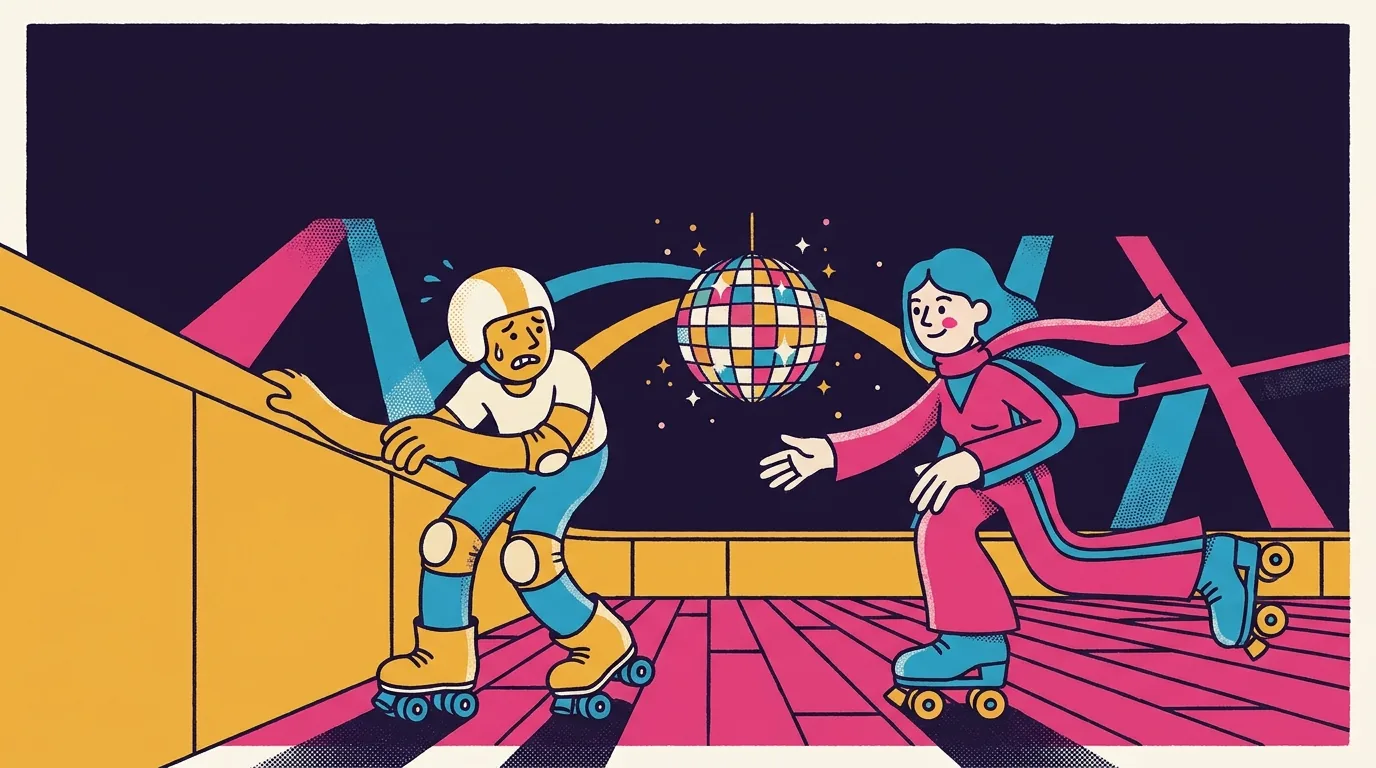
Your first time on roller skates will probably feel wobbly. That’s normal. Almost everyone holds the wall for a while, and almost everyone falls at least once. The good news is that the basics come quickly. With a bit of practice, many people are doing slow laps away from the wall by the end of their first session.
This guide covers a typical indoor roller rink. Every rink runs things its own way, so check its website for the schedule and rules.
When you arrive
At most rinks you pay admission at the front, then pick up skates at the rental counter if you need them. Some rinks ask you to sign a waiver, especially for kids, and some let you do it online ahead of time. You’ll usually swap your shoes for skates on a bench near the counter and leave your shoes in a cubby or locker.
Inside, expect music, colored lights, a snack bar and a big oval floor with a rail or wall around the edge. Public sessions tend to mix families, teens, regulars who skate well, and people who haven’t skated in years. You don’t have to be good to belong there.
Rental skates or your own
Rental skates
Most roller rinks rent quad skates, the classic boot with two pairs of wheels side by side and a rubber toe stop at the front. Some also rent inline skates. Quads are a good choice for a first visit because the wide base feels steady when you’re standing still.
- Give your shoe size and ask if the rink’s sizes run differently. Staff are used to helping with fit.
- Wear socks. Rinks usually expect them with rental skates, and they make the boot more comfortable. Long socks that come above the boot help prevent rubbing.
- Lace them snug. The skate should hold your heel down and support your ankle without pinching. Tie the laces securely and tuck in the loose ends so they can’t catch in the wheels.
- Check the fit before you leave the bench. Stand up, bend your knees and wiggle your toes. If your heel lifts a lot or your toes are jammed, swap sizes now rather than halfway through the session.
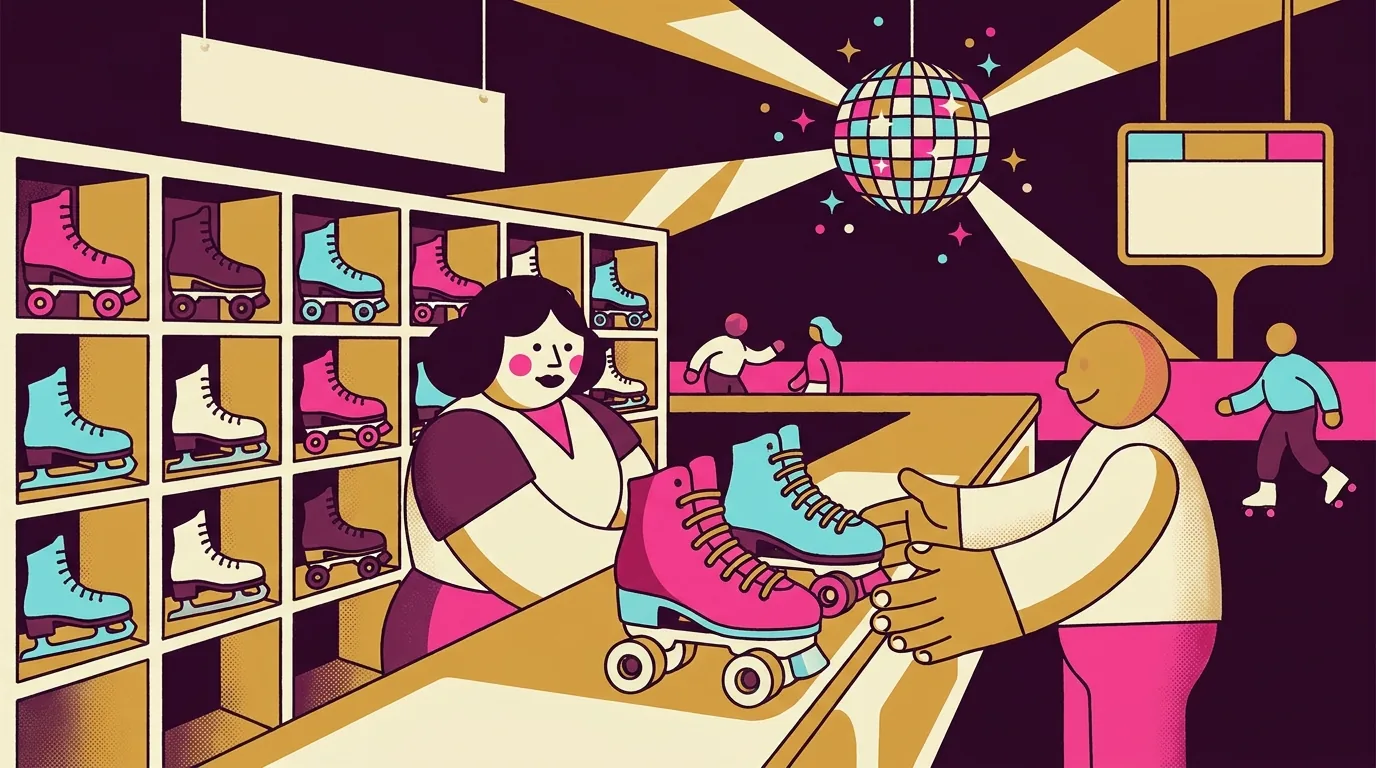
The directory lists rinks where reviews or the rink’s website mention skate rental. Check before you go if you need skates.
Your own skates
If you think you’ll keep going, your own skates are worth it eventually. A skate that fits you well is easier to control than a rental that almost fits. Fit and support matter more than looks. If you plan to skate both indoors and outside, ask about wheels: softer wheels grip rough pavement, while harder wheels suit smooth rink floors. Some rinks check personal skates before you go on the floor.
Your first minutes on skates
Before you step onto the floor, practice standing on the carpet or the bench area, where the wheels don’t roll as freely.
- Find your stance. Feet about hip-width apart, knees bent, weight over the middle and balls of your feet. Lean slightly forward, as if you’re about to sit in a high chair.
- Don’t lean back. Leaning back is a classic beginner mistake. When your weight goes behind your heels, the skates roll forward and you sit down hard.
- March in place. Lift one foot a little, then the other. It teaches you to balance on one skate for a moment.
- Enter the floor carefully. Use the gate or opening, check the traffic coming toward you, and step on when there’s a gap.
- Walk, then glide. Take small steps with your toes turned slightly out, like a duck. When that feels steady, push one foot out to the side and let the other glide. Push to the side, not straight back.
The wall is there to help, so use it. But try to let go for short stretches as soon as you can. Pulling yourself along the rail keeps your weight in the wrong place, and the wall gets crowded.
Slowing down and stopping
For a first visit, two simple stops are enough:
- Toe-stop drag. Keep your weight on your front skate, bend that knee, and drag the toe stop of your back skate lightly behind you.
- Plow stop. Push your feet apart and point your toes slightly inward, so the skates slow you like a wedge. Keep your knees bent.
Don’t jab a toe stop down in front of you while rolling. It can pitch you forward. If you’re going too fast and can’t stop, head for open space and get low.
Falling and getting up
You’ll fall at some point, and that’s fine. What matters is falling small and getting up quickly.
- Get low. When you feel yourself going, bend your knees and drop toward the floor. A short fall hurts less than a tall one.
- Fall to the side or forward. Try to land on your side, your knee pads or your rear end, not straight back.
- Tuck your chin so your head doesn’t hit the floor.
- Don’t catch yourself on straight, locked arms. Bend your elbows. Wrist guards help here.
To get up: roll onto your hands and knees. Bring one foot forward and set the skate flat on the floor between your hands. Bring the other foot up next to it, put your hands on your knees, and push up slowly to standing. Then move toward the wall so the skaters behind you have room.
If someone falls in front of you, steer around them. Don’t stop dead right behind them, and don’t try to lift them up while you’re on skates unless you’re steady. Floor guards will help.
How the rink floor works
A rink only works when everyone moves the same way. A few habits keep it smooth:
- Skate the posted direction. Most rinks go counterclockwise, but some switch during a session. Watch for signs and listen for announcements.
- Beginners stay near the wall. Faster skaters usually pass further in. Many rinks set aside the middle of the floor for small kids, learners or practice.
- Don’t stop in the traffic lane. To rest, fix a lace or check your phone, leave the floor.
- Listen to the floor guards. They keep traffic moving, help people who fall, and run the special skates. Some rinks call them skate guards or referees.
- Watch for special skates. Many roller rinks mix in moments like couples skates, backward skates or games. If it isn’t your turn, clear the floor until the next all-skate.
Our guide to rink etiquette and safety goes through passing, kids on the floor and more.
Tips for a better first visit
- Pick a calmer session if you can. Some rinks hold family or beginner-friendly sessions. The schedule on the rink’s website will tell you what’s on.
- Wear protective gear. Wrist guards, knee pads and a helmet are a good idea for beginners and kids. See what to wear skating.
- Ask about skate aids for kids. Many rinks have walkers or trainers that small children can push around the floor.
- Take breaks and drink water. Skating works your legs harder than it looks, and tired legs fall more.
- Think about a lesson. One class can fix the habits that cause most falls. Here are rinks with skating lessons and our guide to learn-to-skate lessons.
Find a roller rink
Browse roller skating rinks by state, or look for rinks with public skating. Each listing shows the review sentence or website that backs up what it says, plus Google’s opening hours. Session times change often, so check the rink’s own schedule before you go. Not sure whether to try ice instead? Read roller skating vs ice skating.
Common questions
- Do I need to know how to skate to go to a roller rink?
- No. Public sessions usually include first-timers. Stay near the wall, take small steps, and take breaks off the floor when you need them. If you want a head start, ask whether the rink offers lessons.
- Can I bring my own skates?
- Usually, yes. Some rinks look at personal skates before you go on the floor, mostly to check that the wheels won’t mark or damage it. If you skate outdoors on soft wheels, ask the rink whether they’re allowed.
- Do I need a helmet at a roller rink?
- Rules vary by rink, and many don’t require one. A helmet is still a good idea for beginners and kids, along with wrist guards and knee pads. Ask the rink about its own rules before you go.
- Which way do you skate at a roller rink?
- Most rinks skate counterclockwise, so you turn left. Some switch direction during a session. Follow the signs, the announcements and the floor guards.