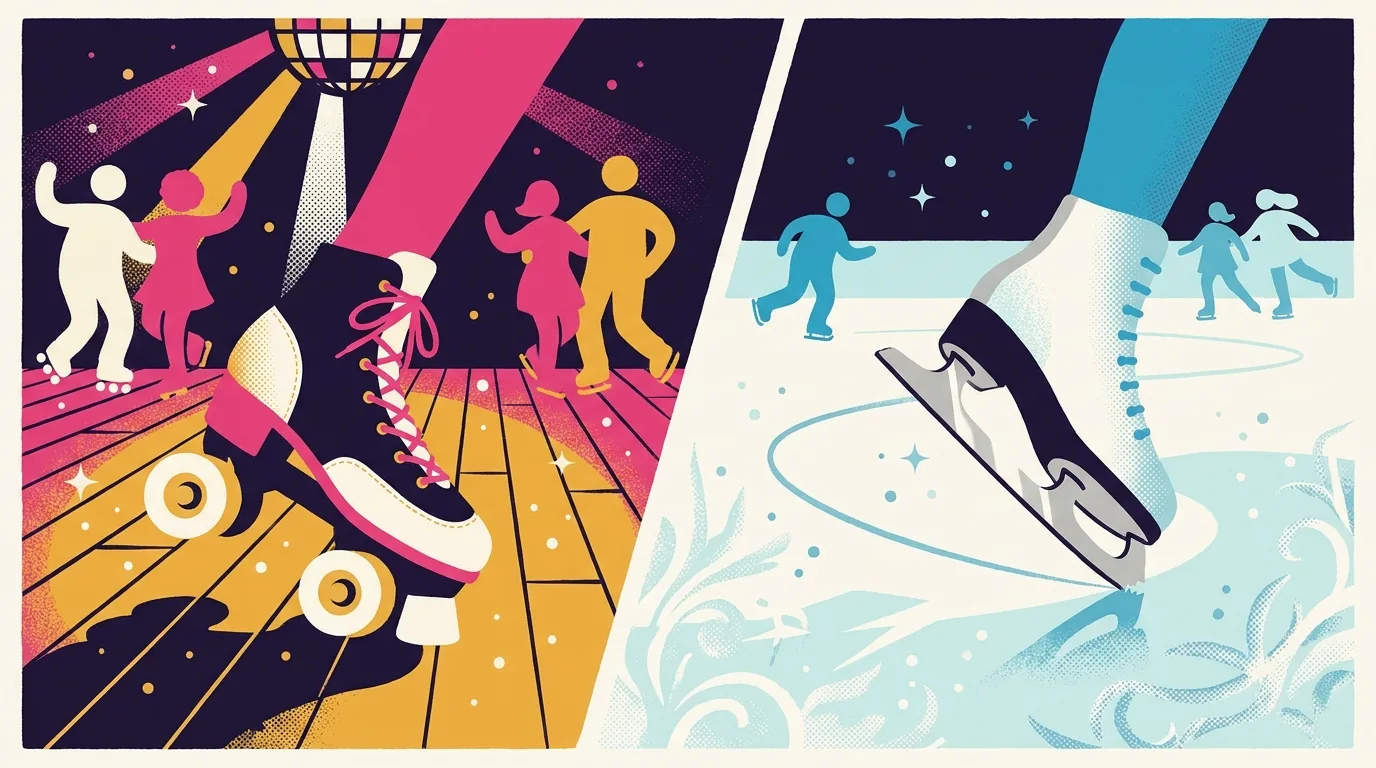
Roller skating and ice skating share a lot. You stand the same way, push the same way and fall the same way. But the skates, the surface and the feel are different enough that people often have a clear favorite after trying both. The directory lists 1,130 roller skating rinks and 1,532 ice skating rinks, so there’s a good chance you can try each one near you.
How they feel
Roller skating happens on wheels. Most rink skaters use quad skates, with two pairs of wheels set side by side under the boot. Standing still feels fairly stable because the base is wide. Wheels have more grip and more rolling resistance than a blade, so you push a bit more to keep moving, and you won’t slide sideways as easily.
Ice skating happens on a single thin blade. The ice is slippery, so the first steps can feel shaky, and your ankles do more work. Once you’re moving, though, each push carries you further in a long, smooth glide. Turning and stopping use the edges of the blade, which takes a little practice to feel.
The gear
| Roller | Ice | |
|---|---|---|
| Skates | Quad skates (most common at rinks) or inline skates | Figure skates (with a toe pick) or hockey skates |
| Brakes | Toe stops on quads, a heel brake on many inlines | None; you stop with the blade’s edges |
| Surface | Wood or a smooth sport floor; outdoors on smooth pavement | Indoor ice all year; outdoor rinks in winter |
| Clothes | Light layers; rinks get warm | Warm layers, gloves; rinks stay cold |
| Pads | Wrist guards and knee pads are common | Less common; helmets for kids and beginners |
Both kinds of rink usually rent skates. See rinks with skate rental, and our guide to what to wear skating.
Stopping and falling
Stopping is one of the biggest practical differences. Quad roller skates have a rubber toe stop at the front. Beginners can slow down by dragging it lightly behind them. Ice skates have no brake at all, so the first thing most ice beginners learn is the snowplow stop: toes in, heels out, and let the blade scrape.
Falls feel different too. The ice is hard, cold and wet, and you’ll want gloves because your hands touch it every time you get up. A roller rink floor is dry but just as hard. On either surface, bend your knees, fall to the side, tuck your chin, and wear a helmet if you’re learning. Both first-time roller and first-time ice guides walk through getting back up.
The learning curve
The first hour looks similar on both: holding the wall, marching in place, short glides, a few falls. After that, the paths split a little.
- Roller often feels easier for standing and walking at first. Getting smooth takes work on pushing, turning and stopping without leaning on the toe stop.
- Ice can feel harder for the first few minutes, mainly because of balance on a thin blade. Many people find the glide makes up for it once they’re moving.
Skills transfer both ways. Knee bend, posture, side pushes and comfort with speed all help when you switch, though you’ll need some time to adjust to the new surface. A group lesson speeds up either one. See learn-to-skate lessons.
Where and when you can skate
Roller rinks tend to be built around public sessions, birthday parties and themed nights, so the schedule often has several chances to skate each week. Roller skates also work outdoors on smooth paths.
Indoor ice rinks run all year, but they share the ice with hockey teams, figure skaters and classes, so public skate times can be limited and change by season. In winter, many cities and parks open outdoor and seasonal ice rinks, which open and close with the weather.
The atmosphere
A classic roller rink session has music, colored lights, a DJ or playlist, and often special moments like couples skates or games. Many roller rinks also run adult skate nights.
Ice rinks vary more. Some feel like a community sports center, with hockey and figure skaters coming and going. Others, especially outdoor rinks, are more about a winter outing with friends or family. Music during public skate is common at both.
Programs and sports
- On ice: hockey, figure skating and learn-to-skate classes are the big three.
- On wheels: roller derby, rhythm and jam skating, roller dance and speed skating, plus lessons.
See every program on the programs page.
Which one suits you?
| If you… | Try |
|---|---|
| Want music, lights and a party feel | Roller, or an adult skate night |
| Want to play hockey or try figure skating | Ice |
| Want to join a roller derby league | Roller |
| Want a winter outing outdoors | An outdoor ice rink |
| Get cold easily | Roller |
| Want to skate outside in warm weather | Roller, on smooth paths |
| Are planning a kid’s party | Either; see rink birthday parties |
For young kids, either works. Many rinks of both kinds have skate aids, and a helmet is a good idea on both. For teens and adults, the best choice is usually the one that’s closest and has a session that fits your week. Then try the other one next time.
Find a rink
Browse roller skating rinks or ice skating rinks by state, or see the best-rated rinks by state, ranked by Google rating weighted by review count. Every claim on a listing, roller or ice included, shows its source.
Common questions
- Is roller skating easier than ice skating?
- It depends on the person. Many beginners find it easier to stand still on quad roller skates, because the four wheels make a wide base. Others find the long glide of ice skates easier once they’re moving. Neither is hard to start, and both get easier fast with practice or a lesson.
- Does roller skating help with ice skating?
- Some skills carry over: bending your knees, keeping your weight centered, pushing to the side and getting comfortable with speed. The surfaces still feel different, so expect a short adjustment when you switch.
- Which is better exercise?
- Both work your legs, hips and core, and both can be gentle or hard depending on how fast and how long you skate. Pick the one you’ll enjoy enough to keep doing.
- Can I do both at the same rink?
- Some rinks have both. The directory lists 107 rinks whose Google listing, reviews or website show both roller and ice skating, but most rinks do one or the other.