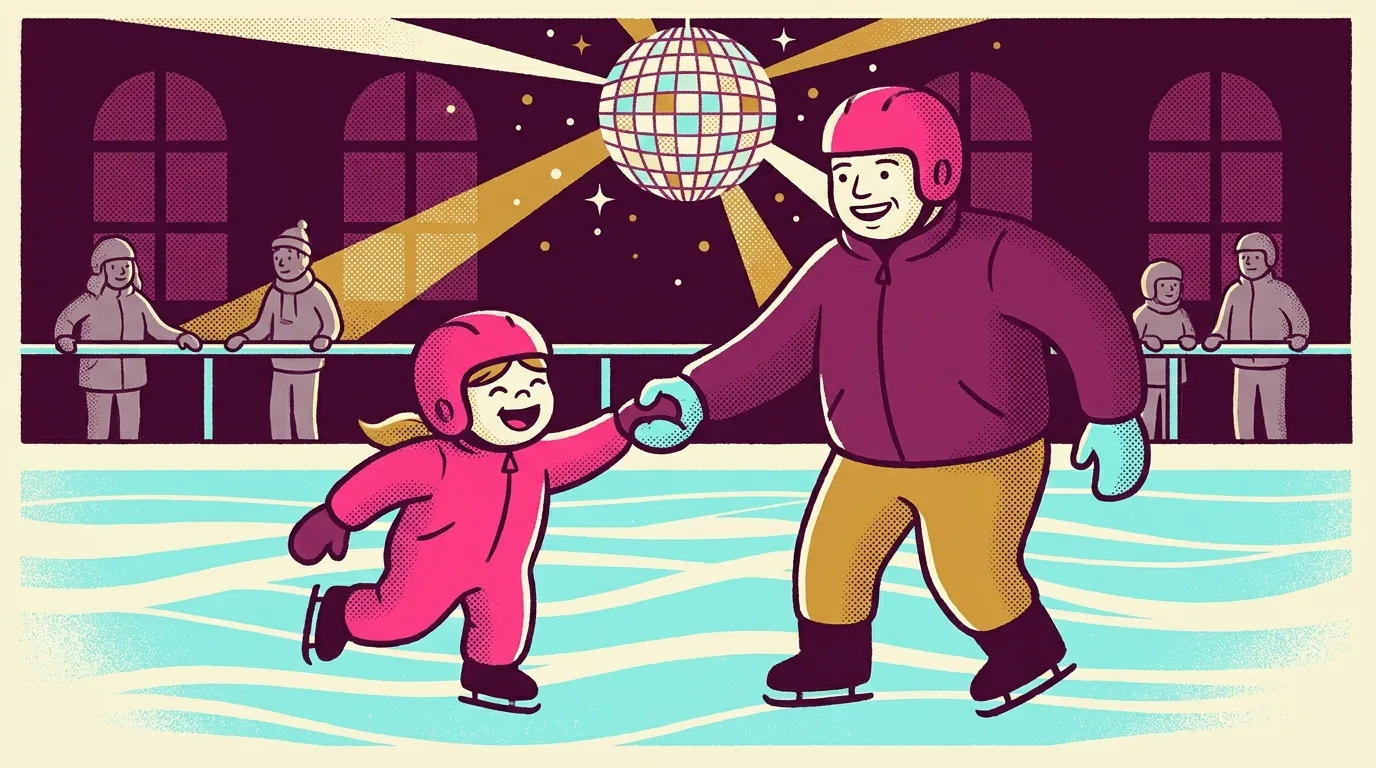
You can learn to skate by going to public sessions and practicing. Lessons speed that up a lot. A coach spots the small habits that cause falls, such as leaning back or skating with straight legs, and teaches skills in an order that builds on itself. The directory lists 1,080 rinks whose reviews or own website mention lessons.
Group lessons
Group lessons are where most people start. A coach works with a small group of skaters at about the same level, usually grouped by age as well. Classes often run as a series, meeting once a week for several weeks, with each class building on the last.
- A set path of skills. Skaters work through levels, from standing and falling safely to gliding, stopping, turning and skating backward.
- Moving up. At the end of a series, the coach decides whether a skater is ready for the next level. Repeating a level is common and nothing to worry about.
- Social. Learning next to other beginners takes the pressure off, for kids and adults alike.
Learn-to-skate programs on ice
Many ice rinks run a structured learn-to-skate program. These usually have named levels and a skill checklist for each one, and some rinks follow a national curriculum. A typical path looks like this:
- Basics: falling and getting up, marching in place, marching forward, a two-foot glide, dips, and the snowplow stop.
- Forward and backward skating: stroking, backward wiggles and glides, and turning.
- Edges and crossovers: controlling the edges of the blade, forward and backward crossovers, and harder stops.
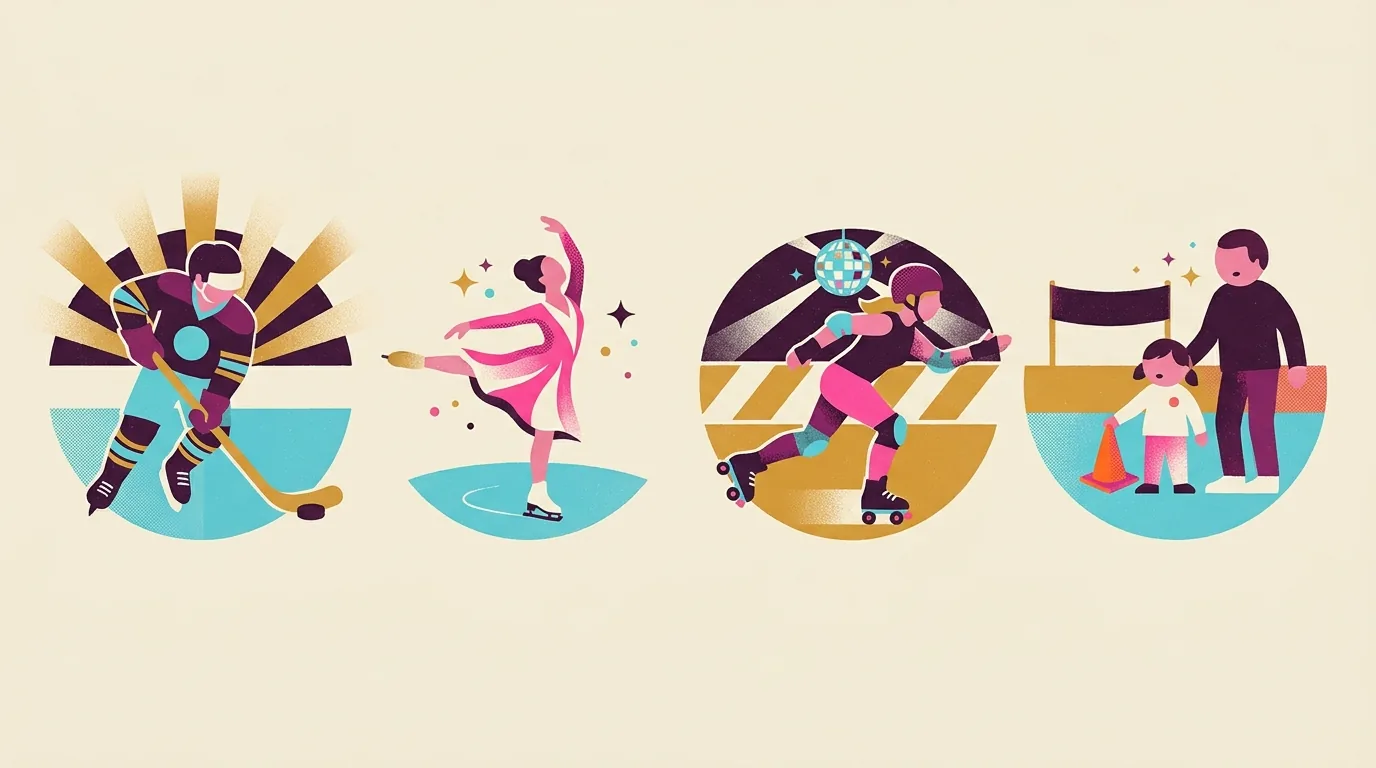
- A path of your own: after the basics, skaters often branch into figure skating, hockey or speed skating classes.
Hockey-focused rinks often run learn-to-play programs for young players, which teach skating along with stick handling. If a child wants to play hockey, ask whether the rink suggests a general learn-to-skate class first.
Lessons on roller skates
Many roller rinks offer lessons too. Some run beginner classes for kids and adults, and some teach rhythm or jam skating, roller dance or speed skating. Roller derby leagues often run beginner programs that teach new skaters the basics before they move on to contact drills. Look for rinks with roller derby if that’s your goal.
Roller lessons cover the same early skills as ice: stance, falling safely, pushing, stopping with the toe stop or a plow stop, and turning. Wrist guards, knee pads and a helmet are standard for beginners.
Private lessons
A private lesson is one-on-one time with a coach. It’s scheduled with the coach, and the coach’s attention is all on you. Private lessons make sense when:
- you want to fix a specific skill, such as a stop, a turn or skating backward;
- you’re nervous and would rather not learn in a group;
- you’re working toward figure skating tests or competitions, or hockey tryouts;
- your schedule doesn’t match the group classes.
Many rinks have coaches who teach privately. Ask the front desk or the skating director how to reach them. Coaches set their own availability and rates.
Ages: kids, teens and adults
Most rinks with lessons have something for every age. Classes for young children are short and playful, with lots of falling-and-getting-up practice and games. Older kids and teens move at a faster pace. Adult classes are common, and they’re a relaxed way to learn or to come back after years away. You don’t need to be young or athletic to start.
Helmets for kids. Many learn-to-skate programs ask young children to wear a helmet, and some have rules about which kinds are accepted. Check with the rink before the first class.
What a first class is like
- Check in. Arrive early to register, get rental skates if needed and lace up without rushing.
- Meet the group. The coach usually checks each skater’s level and may move someone to a better-fitting group.
- Learn to fall. Most first classes start with how to fall safely and how to get back up. It takes the fear out of everything else.
- Basics on the ice or floor. Marching, short glides, holding a balanced stance, and a first try at stopping.
- A game or two, especially for kids, to practice skills without noticing.
- Practice ideas. Many coaches suggest what to work on before the next class. Public skate sessions are the place to practice.
Parents usually watch from the stands or the seating area. Dress kids warmly for ice, with gloves and layers; see what to wear skating.
How to choose a program
- Fit with your week. A class you can get to every week beats a better one across town.
- Placement. Ask how skaters are placed and moved up.
- Group size. Ask roughly how many skaters are in each class and how many coaches.
- Practice time. Some programs include public skate admission so students can practice. Ask.
- Missed classes. Ask whether there are make-up classes.
- A trial. Some rinks offer a trial or drop-in class.
Find lessons near you
Browse rinks with skating lessons, rinks with figure skating and rinks with hockey. Each listing shows the review sentence or website that mentions the program. Class schedules and registration dates change, so check the rink’s website for the current session. New to the ice? Start with first time ice skating.
Common questions
- What age can kids start skating lessons?
- Many rinks run classes for young children, often starting around preschool age, with separate groups for older kids, teens and adults. The youngest age and the groupings differ from rink to rink, so ask about the youngest class the rink offers.
- Am I too old to learn to skate?
- No. Many rinks run adult classes, and plenty of adults learn from scratch or come back after years away. Adult classes move at a pace that suits grown-ups and are usually a relaxed group.
- Should I take group or private lessons?
- Group classes are a good start for most beginners: they follow a set path of skills and are social. Private lessons give one-on-one attention and suit people working on a specific skill or preparing for figure skating or hockey. Many skaters mix both.
- Do I need my own skates for lessons?
- Not usually to start. Many programs let beginners use rental skates, and some include rentals. Ask the rink. If you keep going, skates that fit you well make progress easier.