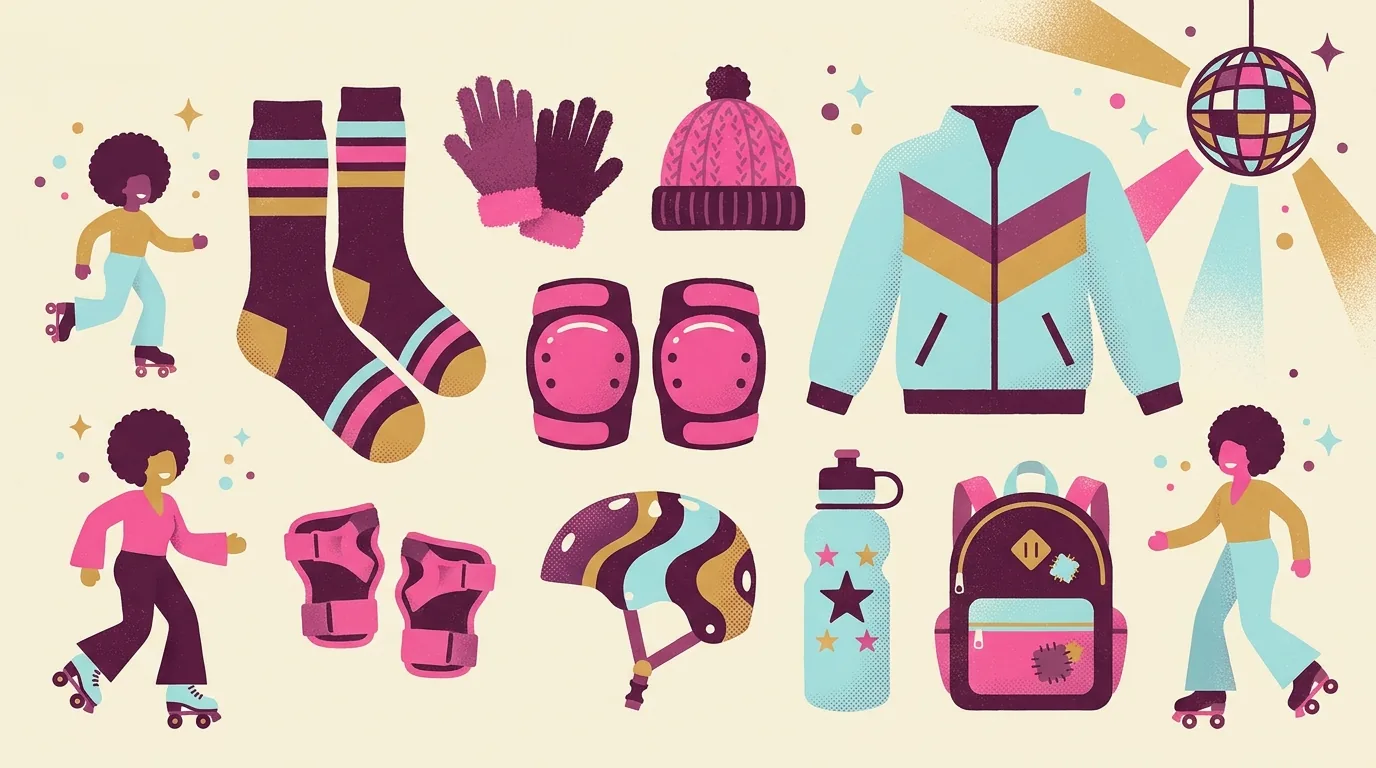
You don’t need special clothes to go skating. What you need is clothing that lets you bend your knees, keeps you comfortable for an hour or two of moving, and doesn’t get in the way when you fall. The details change depending on whether you’re rolling on a wooden floor or gliding on ice.
The short version
| Roller rink | Ice rink | |
|---|---|---|
| Top | T-shirt with a light layer over it | Warm layers, such as a fleece or light jacket |
| Bottoms | Anything you can bend your knees in | Leggings, athletic pants or snow pants, not jeans |
| Socks | Socks that come above the boot | One pair of thin or medium socks, above the boot |
| Hands | Wrist guards for beginners | Gloves or mittens |
| Head | Helmet for beginners and kids | Helmet for beginners and kids, or a warm hat |
| Pads | Wrist guards, knee pads, elbow pads | Optional knee pads or padded shorts |
What to wear to a roller rink
Indoor roller rinks are heated buildings, and skating is a workout. Most people start out comfortable and end up warm. Light layers work best: a T-shirt with a sweatshirt or light jacket you can take off and leave in a cubby.
- Bottoms that let you bend. Leggings, joggers, athletic shorts or jeans with some stretch all work. If you can’t squat comfortably in them, choose something else.
- Nothing that drags. Very wide or long pant legs can catch on the wheels or under the toe stop. Roll them up or choose a narrower cut.
- Nothing that dangles. Long scarves, loose belts and drawstrings can get caught. Tuck them in or leave them off.
- Hair tied back if it’s long, so it stays out of your eyes when you turn.
What to wear to an ice rink
Ice rinks are kept cold so the ice stays hard. Even in summer, you’ll want long sleeves and long pants. You warm up while you skate and cool off fast when you stop, so layers you can open and close are the answer.
- A base layer and a warm layer. A long-sleeve shirt with a fleece or light jacket over it suits most indoor sessions.
- Pants that stay dry. Leggings and athletic pants are flexible; snow pants are best for small kids who fall a lot. Jeans soak through and get stiff.
- Gloves or mittens. Your hands touch the ice whenever you fall or get up, and cold, wet hands make a short session feel long.
- A hat or a helmet. A beanie fits under some helmets; ask the rink if it has rules about what’s worn on the head.
For outdoor rinks, go warmer still: a thermal base layer, a winter coat that doesn’t restrict your arms, waterproof gloves and a hat that covers your ears. See the outdoor ice skating guide for more.
Socks
Socks are the part of the outfit people most often get wrong.
- Above the boot. Whatever you skate in, choose socks that come up higher than the top of the skate so the boot doesn’t rub your ankle or shin.
- Roller rentals: rinks generally expect socks with rental skates. Any comfortable pair works. A slightly thicker sock can fill out a rental that’s a touch big.
- Ice skates: wear one pair of thin or medium socks. Thick socks or two pairs crowd the boot, make it harder to lace snugly, and can leave your feet colder.
- Bring a spare pair. Wet socks after an outdoor session are no fun on the ride home.
Pads and wrist guards
Protective gear is simple insurance for a beginner. When people fall, they tend to put their hands out or land on their knees, and pads take the sting out of that.
- Wrist guards have a stiff splint that supports your wrist if you land on your hands. Many roller skating beginners start with these.
- Knee pads let you fall forward onto your knees instead of your hands.
- Elbow pads add a bit more protection, especially for kids.
- Padded shorts cushion your hips and tailbone. Some adult beginners wear them under leggings for ice and roller skating alike.
Pads are common on roller skates and less common on ice, but nobody will mind either way. Some rinks sell or rent pads; ask before you go if you don’t own any.
Helmets
A helmet is a good idea for anyone learning, and especially for kids, whether on roller or ice. Look for a helmet made for sports that sits level on the head, covers the forehead and fits snugly with the strap buckled. Many families use a bike, skate or multi-sport helmet. Some learn-to-skate programs ask young children to wear a helmet, and they may have rules about which kinds they accept, so check with the rink or program first.
Replace a helmet after a hard hit, even if it looks fine.
Dressing kids
- Helmet first. Small children fall often, and falls on ice or a hard floor can be backward.
- Snow pants and mittens on ice. They keep kids warm and dry, and mittens are easier for small hands than gloves.
- Pads on roller skates. Wrist guards and knee pads make falls less scary, which keeps kids trying.
- An extra layer in the bag for the bench, the snack break and the walk out to the car.
What to bring
- A water bottle. Skating is thirsty work, even on ice.
- Spare socks and a spare layer.
- A bandage or blister pad in case a rental skate rubs.
- A lock, if the rink has lockers that need one.
- Your own skates with blade guards (for ice) or a skate bag, if you have them.
- A photo ID if you’re going to an adult skate night.
If you don’t own skates, look for rinks with skate rental. To pick a place to go, browse roller skating rinks or ice skating rinks by state.
Common questions
- Can I wear jeans to skate?
- At a roller rink, yes, as long as they let you bend your knees. On the ice, jeans aren’t a great choice: they soak up water when you fall and get cold and stiff. Leggings, athletic pants or snow pants work better.
- Can I wear shorts or a skirt?
- At a warm roller rink, many people do. Your knees are less protected when you fall, so knee pads help. At an ice rink, cover your legs. The air is cold and the ice scrapes bare skin.
- Do I need a helmet to skate?
- Rules vary by rink and by program. A helmet is a good idea for beginners and children on roller skates or ice skates, and some learn-to-skate classes ask young kids to wear one. Ask the rink what it requires and which helmets it accepts.
- What socks are best for skating?
- Socks that come up above the top of the boot, so the boot doesn’t rub your skin. For ice skates, one pair of thin or medium socks gives the snuggest fit. For rental roller skates, any comfortable pair works, and most rinks expect you to wear them.