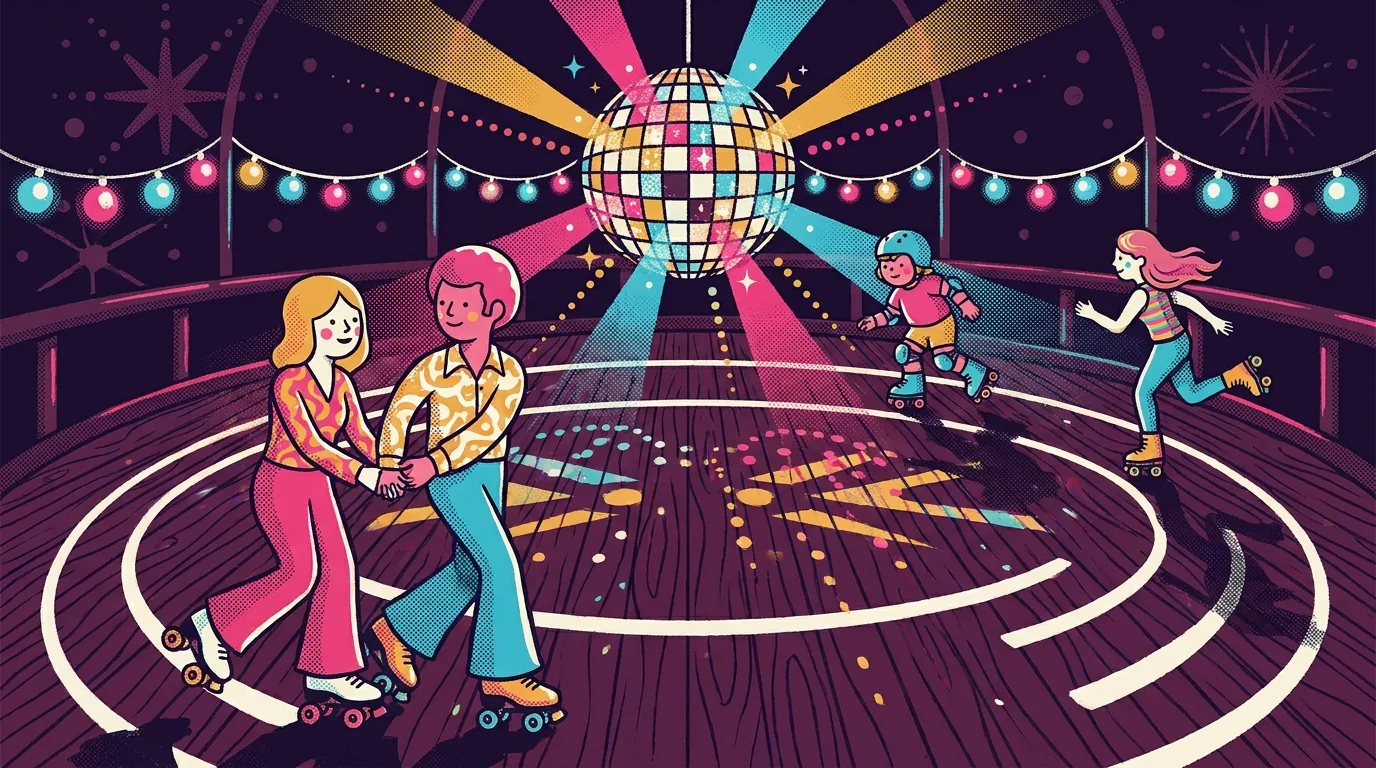
A public session can have beginners, kids, regulars and fast skaters all on the floor at once. That mix works well when everyone knows the unwritten rules, and the written ones too. The habits below apply at most roller and ice rinks. Each rink also posts its own rules, and those come first.
Skate with the flow
- Everyone goes the same direction. At most rinks that’s counterclockwise, turning left. Some rinks reverse direction during a session; watch the signs and listen for the call.
- Never skate against traffic. If you need to go back for something, leave the floor and walk around.
- Enter and exit at the gates. Look at the traffic coming toward you and step on when there’s a gap. When you leave, signal by moving toward the wall early instead of cutting across.
- Know the zones. At many rinks, slower skaters stay near the wall and faster skaters pass further in. The center is often used for practice, small kids or learners. Follow what your rink posts.
Passing
Passing is where a lot of close calls happen. Give people plenty of room, and pass on the inside unless the rink says otherwise. Don’t cut in front of someone and then slow down. Assume beginners can wobble or stop without warning, because they can.
- Keep your speed sensible for how crowded the floor is.
- Don’t weave through skaters or race your friends. Speed skates, if the rink has them, are announced.
- If you’re a beginner being passed, keep going in a straight line at a steady pace. That’s the easiest thing for others to skate around.
Stopping and resting
The floor is a moving lane, not a place to stand. To fix a lace, check your phone, catch your breath or wait for friends, step off at a gate. Don’t stop in the middle of the traffic or in front of the gates, where people are coming on and off.
On ice, take your rest on the bench or the rubber floor, not leaning on the boards in a crowd. Groups that bunch up at the wall make it hard for beginners to find a spot to hold.
Falling
Falls happen to everyone. Good habits make them quick and harmless:
- Get low and fall to the side. Bend your knees, tuck your chin and keep your arms bent.
- Get up fast, or stay small. If you can stand right away, do it and move toward the wall. If you can’t, stay curled up with your hands and fingers tucked in until a floor guard helps or traffic clears.
- On ice, mind your fingers. Skate blades are sharp. Keep your hands close to your body while you’re down.
- If someone falls in front of you, steer around them. Don’t brake hard right behind them, or the people behind you may pile in.
Our first-time guides for roller and ice show how to get up step by step.
Skating with kids
- Helmets for young kids, on roller and on ice. Wrist guards and knee pads help on roller skates.
- Skate aids give small children something steady to push. Ask at the counter whether the rink has them.
- Hold hands carefully. Holding a child’s hand while you both skate slowly near the wall is common. Don’t carry a child while you skate; many rinks don’t allow it.
- Use the kids’ or learners’ area if the rink sets one aside.
- Stay close. Young children can tire quickly and sit down without warning. Keep an eye on them and take breaks off the floor.
Groups
Skating with friends is half the fun, but large groups can block the floor. Skate in twos rather than in a wide line. Don’t link up in long chains or whips, play tag, or push each other. Most rinks don’t allow it, and it’s the kind of thing that ends with someone else on the floor.
Phones, food and bags
- Phones away while you skate in traffic. Filming or texting on the move means you aren’t watching the people around you. Film from off the floor, and be mindful of others in the shot.
- No food, drinks or gum on the floor. A spill on a rink floor or on the ice is a hazard for everyone.
- Leave bags in a cubby or locker. A swinging bag throws off your balance and can hit other skaters.
Floor guards, skate guards and referees
Most rinks have staff on the floor during public sessions. Roller rinks often call them floor guards or referees, and they often wear a striped shirt or a vest and carry a whistle. Ice rinks may call them skate guards or ice monitors. They keep traffic moving the right way, slow down fast skaters, help people who fall, and run special skates.
Listen when they blow the whistle or speak to you. If a guard asks you to slow down, change direction or leave the floor, it’s about keeping the session running well for everyone.
Special skates and resurfacing
Many roller rinks mix in special skates, such as couples skates, backward skates, games or speed skates, often announced by the DJ. During a special skate, only the skaters it’s for should be on the floor. Everyone else waits at the side until the next all-skate.
Ice rinks clear the ice between sessions, and sometimes mid-session, so a machine can resurface it. When you’re asked to leave the ice, leave promptly and wait until staff say it’s open again.
Gear checks
- Laces tied and tucked, so they can’t catch in wheels or under a blade.
- Blade guards off before you step on the ice, and back on when you walk off it.
- Rental skates that fit. If your heel lifts or your ankles cave in, swap sizes or relace.
- Pads and a helmet for beginners and kids. See what to wear skating.
Know when to stop. Tired legs lead to more falls. Take breaks, drink water, and call it a day when your form starts slipping. If someone is hurt, tell a floor guard or the front desk right away.
Find a rink
Browse roller skating rinks and ice skating rinks by state, or rinks with public skating. Want a coach to teach you the habits above? Look for rinks with skating lessons.
Common questions
- Which direction do you skate at a rink?
- Most roller and ice rinks skate counterclockwise during public sessions, so you turn left. Some switch direction partway through. Follow the signs, the announcements and the floor guards.
- Can I skate backward during a public session?
- At many rinks, yes, if you can control your speed and see where you’re going. Some rinks limit backward skating to certain times or announce a backward skate. If a floor guard asks you to stop, do.
- Can I carry my toddler while I skate?
- Many rinks don’t allow it, because a fall while carrying a child can hurt both of you. Ask about skate aids, the frames young kids can push across the floor or ice, or hold your child’s hand while you both skate slowly near the wall.
- What do floor guards do?
- Floor guards, sometimes called skate guards or referees, keep traffic moving in the right direction, slow down skaters who are going too fast, help people who fall and run special skates. If one asks you to change something, they’re looking out for everyone on the floor.